There's no such thing as free internet – we just don't understand how we pay for it 3/1.
Is internet access a fundamental human right?
This article is the first part of a three-part series on the monetisation of network services – paid internet, if you like. In this part, we look at whether internet access should be thought of as an entitlement. In the second part we examine the unit and infrastructure costs of online data systems. The third and final part covers paid content, the rise of the paywall and the business model of subscription services.
„Internet access is not a luxury but a human right, which we have a moral duty to provide. Everyone must be given unmonitored and uncensored access to this global medium. Those who cannot afford it must receive it free of charge. Many people without internet access would be unable to influence and hold accountable supranational lawmakers and institutions. These individuals would have no say in making the binding rules that shape our life chances."
– wrote Dr Merten Reglitz, a lecturer in Global Ethics at the University of Birmingham, in a study published in the Journal of Applied Philosophy at the end of 2019. In the article, Reglitz outlined the difficulties of providing universal internet access, illustrating them with the fact that two years ago 51 percent of the world's population had internet access.
In another opinion piece for The Conversation, Reglitz also explained, that internet access is essential for a decent life, which is not just about survival but also about exercising human rights and being able to influence the rules and regulations that affect our lives. Reglitz noted that the Universal Declaration of Human Rights also treats freedom of expression and opinion, and the right to access information, as fundamental rights.
Before the internet spread, people in democracies could exercise their political rights with roughly equal opportunity: they could vote, write to newspapers or their MPs, attend public forums and join various organisations. Those with internet access have far more ways to do so. They can publish their views on online forums, form alliances without regular meetings, and gain political knowledge unobtainable without the internet.
It's hard to fault Reglitz's reasoning – if anything, it may seem unusual that some states have apparently made the philosopher's proposals part of their official policy:
- in the Indian state of Kerala, internet access was recognised as a human right, so since 2019 the state's 35 million residents get internet access for free;
- the EU's WiFi4EU initiative aimed to provide free wireless internet in central facilities of European towns and villages;
- providing global internet access is part of the UN's Sustainable Development Goals. The organisation has called on its member states to help spread the internet in developing countries.

Free as in freedom, or free of charge?
When it comes to internet access, freedom can be understood in two ways. The first is the right to unobstructed access to the internet. In a non-binding 2016 resolution, the UN General Assembly stated that the internet should be unmonitored, uncensored and impossible to shut down. Thirty years ago, the inventors of the World Wide Web also envisaged an open, freely accessible network, but this freedom has often been trampled on in recent years. Some countries, such as Russia, China, Eritrea, Ethiopia, Iraq, India, Congo, Syria and Sudan, increasingly resort to partial or complete shutdowns of online traffic. Joshua Franco, deputy director of Amnesty Tech, told the BBC, that although they don't comprehensively monitor global internet shutdowns, the practice is clearly becoming more widespread.
If shutting down the internet seems drastic, consider that Russia is working on a parallel internet network accessible only within its borders, allowing the government to track every citizen's activity. And they may be small fry next to China, home to the world's most advanced and most tightly controlled online spaces, where the Great Firewall makes foreign websites and services almost impossible to reach.
According to the other interpretation, governments should provide the infrastructure needed for internet access, to which every citizen is entitled regardless of wealth – much as equality before the law means legal protection is also due to someone who can't afford a star lawyer.
Backed by cash-rich tech companies
In English, the same word (free) is used for both gratis and unrestricted. We've just described the principles of internet freedom – but what about it being free of charge? After all, the internet isn't free. Online content, monthly subscriptions and the hardware infrastructure needed to build and run the service all cost money.
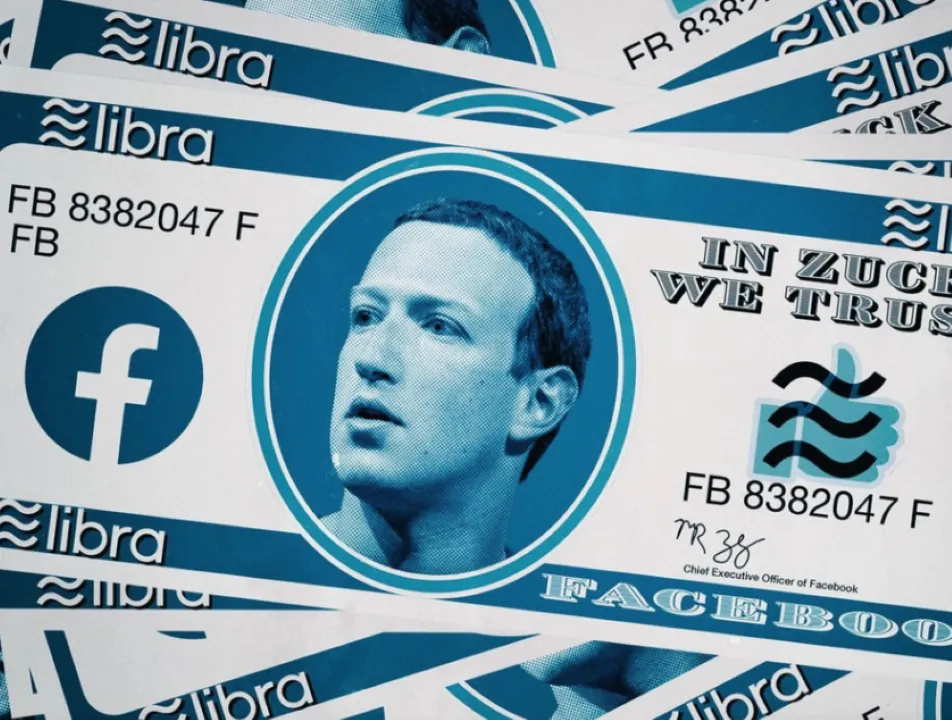
The private sector also sees potential (read: money) in providing global internet access. Facebook CEO Mark Zuckerberg, in an open letter written in 2013, examined whether internet access is a fundamental right – and concluded that it is. The initiative to connect the world, Internet.org, was joined by several big Silicon Valley companies – though few went as far as Zuckerberg, who considered developing technologies such as solar-powered drones providing data connections to people in isolated regions. Mind you, he wasn't motivated by respect for human rights but by the aim of bringing in the five billion people not yet registered on Facebook.
„Facebook's community standards and corporate policy cannot replace the UN Declaration of Human Rights."
– Franco told the BBC.

Elon Musk's space company SpaceX came up with a similar initiative, though not aimed at developing countries. In the first half of this year, the company will provide free internet access to 45 families in isolated parts of Texas via the 900-satellite Starlink network. But like the other big corporations, SpaceX isn't acting selflessly: the Ector County Independent School District (ECISD) pays SpaceX three hundred thousand dollars a year for the service.
These tools are needed because building traditional online infrastructure in isolated regions would be a difficult investment that never pays off. But if the new technologies become cheaper and more widespread, more and more people will be able to connect. Encouraging this matters all the more because growth in the number of new internet users has noticeably slowed in recent years.
„Universal internet access doesn't require spending a fortune. Politically important opportunities – such as blogging, joining virtual communities, gathering information or sending and receiving emails – don't need the latest information technologies. With web-enabled phones, people would have access to these services and public platforms. For those living in regions where a private domestic subscription would be too expensive, we could also provide online access through community libraries."
– said Reglitz.
Digital connection in the time of corona
The coronavirus pandemic proved the internet should be a public utility – that's the title of an opinion piece by Ephrat Livni, a Washington-based reporter covering legal and political affairs.
According to Livni, in the 21st century internet access should be regarded as a basic need like water, gas or electricity. True, in the barest sense the internet isn't essential for survival – but neither are electricity and running water. We wouldn't die if we had to switch to candlelight or spring water carried home in buckets – but we couldn't consider ourselves a developed society either.
Yes, the internet can be a basic need. In international crises, quick access to up-to-date, reliable information is vital; it's the best antidote to alienation and ignorance. (It's no coincidence that Prime Minister Viktor Orbán announced the pandemic measures on Facebook, which offers fast, wide reach: Facebook was undoubtedly a more efficient platform for this than relying on slower, lower-reach TV, radio or newspapers would have been.)
The coronavirus pandemic showed that by now everything and everyone is connected. That's partly why we've stayed sane while locked in our homes: the internet helps us keep in touch and stay informed. But if we didn't hear about the spread of infectious diseases or couldn't learn about their nature, it would pose a deadly risk.
What would I do with a free workhorse?
Philosophers, socially minded journalists and human rights advocates obviously approach the question of internet as an entitlement differently from experts from the technical and scientific sphere. The former start from the perspective of „are we entitled to it?" and answer yes. Vinton Gray Cerf, however, thinks even the definition of fundamental human rights is problematic.

Cerf is regarded as one of the founding fathers of the internet. He helped create the TCP/IP protocol, worked at IBM, DARPA and Google, and his life's work has been honoured with the Turing Award, sometimes called the Nobel Prize of computing, and the most prestigious US award in technology and science, the NMTI (National Medal of Technology). In 2012, in connection with the Arab Spring, Cerf wrote an opinion piece for The New York Times, in which he argued that the internet is a technology, and technology is not itself a right; at most it can be a means of exercising certain rights. We have a right, for example, to lead a healthy, meaningful and self-aware life, but it's unwise to conflate that with specific technologies.
„At one time if you didn't have a horse it was hard to make a living. But the important right in that case was the right to make a living, not the right to a horse. Today, if I were granted a right to have a horse, I'm not sure where I would put it."
– wrote Cerf. In his view, it's better to define human rights by looking at the outcomes we want to achieve. While freedom of speech and the right to access information are critically important, these fundamental rights aren't tied to specific technologies. Even the UN report describing internet access as a fundamental human right stated that the internet can be a valuable means to an end rather than having value in itself.
Cerf's views seem to be widely shared – including by the tech companies shaping the internet of the future. Zuckerberg's initiative internet.org slowly withered after its initial momentum; telecoms companies don't introduce data services in regions where they can earn more from texts and calls; and Facebook also killed the Aquila project developing solar-powered drones.
So who can we count on? Who will provide the means to exercise our fundamental rights? Certainly not the companies that own the necessary technology. They look at whether the balance sheet will be positive, and apparently free internet service costs money rather than making it. But if we treat internet as an entitlement – a welfare expense – it must be funded not by profit-driven private companies but by the state.