Revealed: where Windows XP's most notorious key leaked from
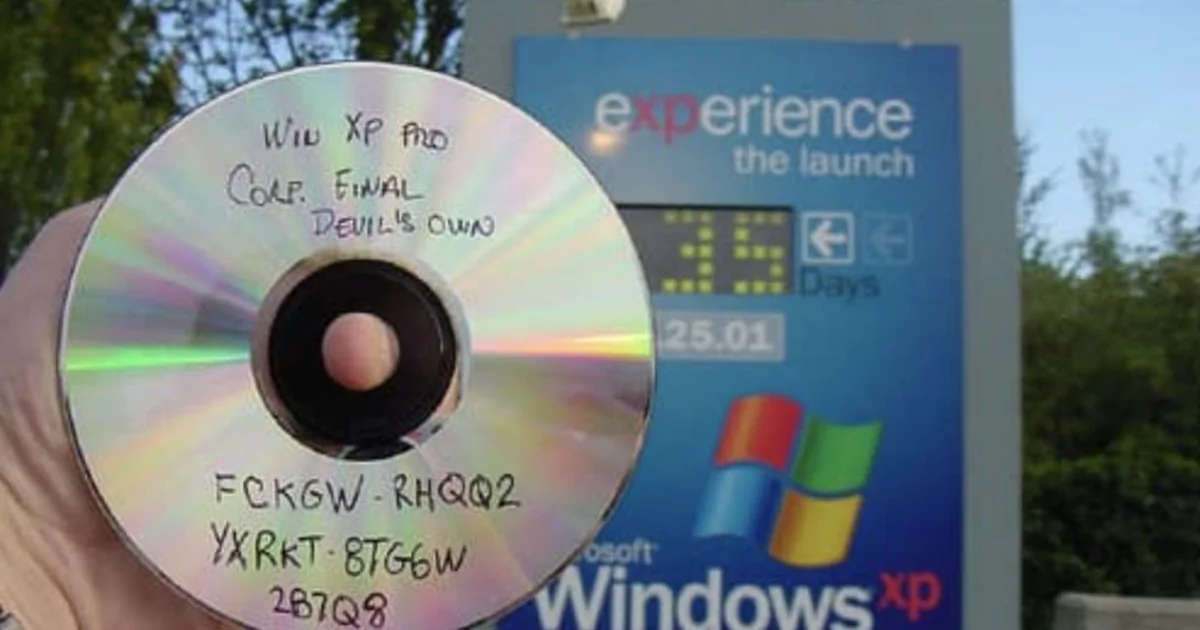
There's a string of characters a whole generation knew by heart: FCKGW-RHQQ2-YXRKT-8TG6W-2B7Q8. Windows XP's most notorious activation key circulated online for years, and now it's finally clear how it got out of Microsoft.
The story was shared by Dave W Plummer, a former Microsoft engineer. He has told many insider stories about the old Windows era, and now he answered the question half the internet speculated about in the 2000s: where did the key come from that activated practically every downloaded XP installer without a lockout?
Not a crack but a leak
The gist is disappointingly simple: nobody cracked any encryption. The key was a so-called Volume License Key – the kind of bulk licence key big PC makers received so they didn't have to type in a separate key for every computer they built.
The manufacturers – including Intel and Dell – received the installation discs two months before public launch, on 24 August. Windows XP's world premiere wasn't until 25 October 2001. According to Plummer, the notorious string came from one of these partners, most likely Intel or Dell, and the warez group Devils0wn made it immortal by releasing the disc image with the key already written in.
From then on, the code took on a life of its own. It spread on forums, on CD cases, written on discs with felt-tip pens, and for a long time it worked for every home installation.
Where the key check was hidden
The most entertaining part of the story, though, isn't the leak but the hiding place. According to Plummer, the developers put the encrypted data needed for key validation where no one would look: in the code of Microsoft Bob.
Bob was one of Microsoft's most spectacular flops, a cartoonish, living-room-style interface from the mid-nineties that users thoroughly mocked. That the company hid one of XP's security building blocks in this already buried project is both elegant and surprisingly funny.
When the party ended
The key didn't work forever. Microsoft blacklisted it in September 2002 with the release of Service Pack 1: from then on, the update couldn't be installed on machines activated with this code.
The crackdown continued in August 2004, when the company also began blocking updates for systems installed with the pirate key. So the XP era ended sooner for the most famous key than many remember.
What we can learn from it today
The case is still instructive: even the best-designed licensing system fails not because of the maths but because of the weakest link in the human chain. A key given to a partner, a moment of carelessness, and off it spreads.
The practical lesson for users is the same: an installation disc of dubious origin or a cheap key is no bargain today either. By the first major update at the latest, it turns out the machine didn't get what was paid for. If you're not sure your computer runs a properly licensed system, I'm happy to check.