Let's be clear: ChatGPT will never be your friend, but it flatters you in conversation
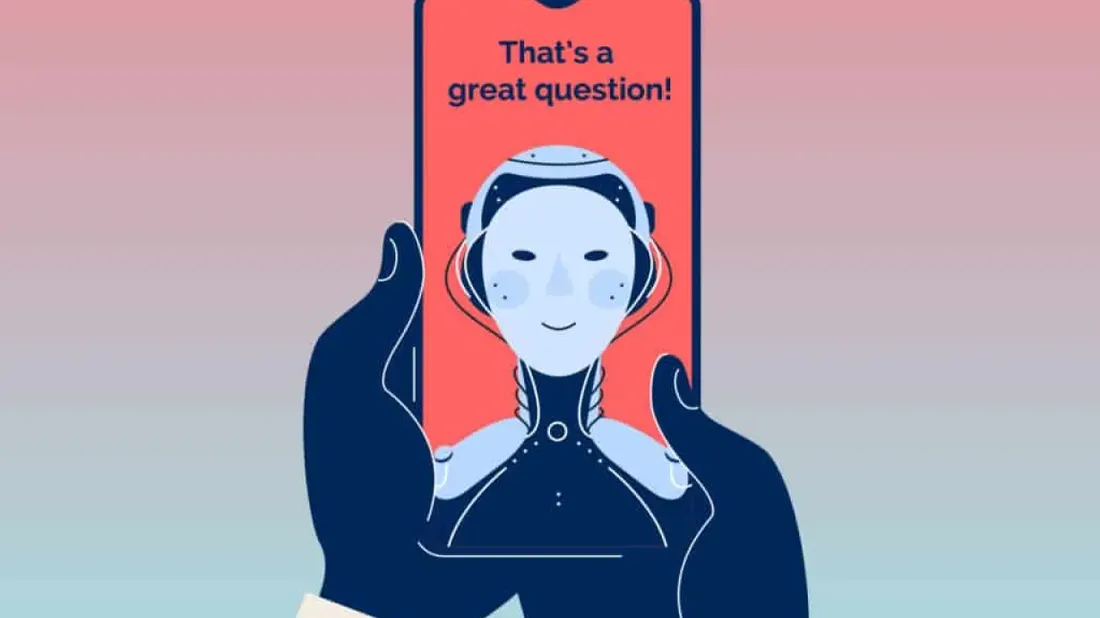
ChatGPT, Copilot, Gemini and similar programs are increasingly popular. We use them to look things up, to learn and to ask for advice. Nothing wrong with that. But if we thoughtlessly share sensitive, personal data „with them" along the way, that can cause problems...
Although many are wary of it, more and more people use artificial intelligence (AI) for work and in their private lives. The only question is whether users can handle it safely and how well they know its dangers. According to Máté Benyovszky, author of the aiszakerto.hu blog, artificial intelligence is a good thing, but it requires a certain awareness.
Think of it as an assistant!
„Many still see the biggest danger of artificial intelligence, AI, as taking people's jobs," our expert begins. „Recently at the playground I heard mothers chatting while pushing swings about what trade their children should learn that will still be needed alongside artificial intelligence. But that's not so easy to answer. A few years ago, artists wouldn't have thought AI would threaten their livelihoods.
Today poems and paintings are made in moments using this technology. So it's very hard to predict how far development will go. Perhaps I can say it can't yet get into areas where there's little data, or, obviously, where knowledge gained remotely isn't enough. For example, I find it hard to imagine AI taking over electricians' work any time soon.
On the other side are those who see ChatGPT, Copilot and co. not as an enemy but literally as a friend. I think the truth lies somewhere in between: we shouldn't fear it but rather see it as an assistant that helps extend our own abilities. The responsibility lies with people! And I don't just mean developers and providers, but users too."
It's better at filtering out false information
One of the most common arguments against AI is that it doesn't know everything either and sometimes shares nonsense or false information. According to Máté Benyovszky, it's true the system sometimes makes mistakes and can use false statistics, but its error rate is much lower than with Google search.
„Countless data – you could say the whole internet – is available to AI, which it can process with fresh data in moments when learning or searching. Although they try to filter this both during learning and searching, in theory it can run into insufficiently verified publications, but it can filter out false information much better than even Google's supposedly vetted ad system, because it understands what it's about," Máté explains.
During development, the system is in fact deliberately trained to filter out false information – that is, not to „hallucinate".
„By hallucinating I mean that AI is trained to give nice, good answers. One consequence is that ChatGPT, for example, after a short search – like a moderately prepared student in an exam – will try a good-sounding answer even if it may not be accurate. But as it develops, you have to expect this less and less, especially with paid services."
Should we ask it for an expert opinion?
The question arises: if we get reliable information, is the system also suitable for medical diagnosis? In various online groups there are more and more posts about people showing ChatGPT their earlier medical results and specialist opinions and having it review them – because, say, they've been in treatment for a long time and previous therapies haven't helped.
So who should I believe, the doctor or the AI? they ask. According to our expert, AI doesn't replace a medical examination or even a case conference, but you can ask it for a second opinion. In fact, Máté Benyovszky would rather choose a doctor who uses AI in their work.
It's not yet suitable for medical examinations, imaging diagnostics, blood tests and so on, but it can already analyse the results obtained from them. But healing is a complex process; many other factors – family history, medical history, lifestyle, etc. – affect us, and it's worth telling the AI about these to give it the full picture. But on its own I wouldn't recommend it as a replacement for doctors. As a second opinion, or perhaps to prepare for a consultation (so we know what to ask the doctor), I definitely recommend it. In fact, more and more doctors subscribe to ChatGPT to keep developing and get easier access to the latest research and methods."
The price of free
Medical results, illnesses, age and so on count as confidential personal data. Are they safe if we share them with AI? Serious companies can't afford to misuse data, so they can basically be considered safe – but typically their subscription services. With free use, we give the conversation transcript in exchange, which may be used to train the next AI version unless we turn this off.
„The fear is justified, but you should know that these apps are run by the same big providers as, say, the Gmail email system. What's more, some interfaces let you set whether your conversations can be used for further AI development. It's important to use these options with due care, paying attention to the right security settings. And let's consider whether it might be worth subscribing to a generally smarter, more secure AI service instead," the expert advises.
In a friendly tone
Beyond personal data leaks, a justified worry for the future is whether a dependent relationship could develop where we don't make decisions without it. These systems were trained on human interactions, so they're able to respond in a style similar to ours. That is, if we're kind and empathetic, they'll respond in kind. In fact, they're trained to always try to give the answer most useful and pleasing to the user.
„I've heard of people who literally feel ChatGPT or Copilot is their friend, but not of an actual dependency yet" – says our expert. „Actually, I think if someone lives alone, has no one to talk to, or is withdrawn and finds it hard to open up to others, then talking to ChatGPT is a good opportunity for them.
It's been tested on helplines, and AI performed well – perhaps even better than humans.
It managed to be empathetic enough and helped those who turned to it. Of course, an unhealthy attachment could develop, but in my view that's a more complex process that requires some personality disorder or similar."