Website design quote – what's included?
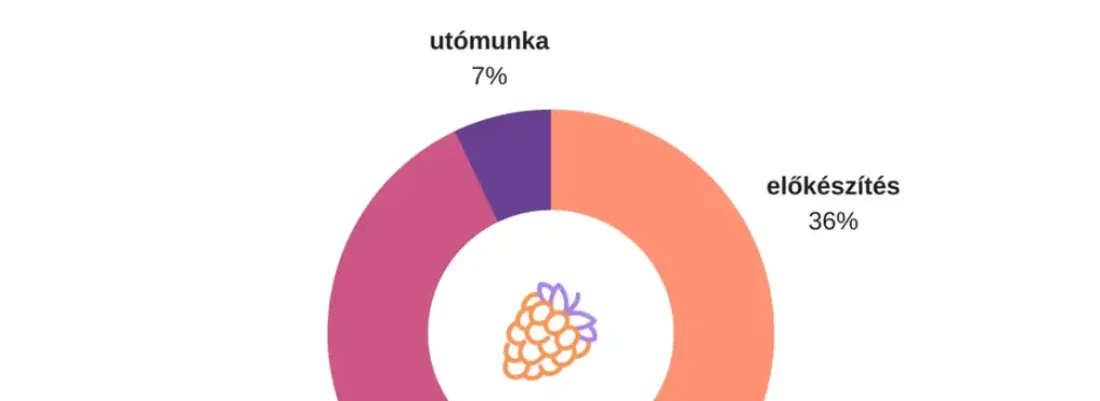
The preparation phase (36%)
When someone wants a website designed (or redesigned), they don't have detailed ideas of exactly what they want. Yet the web developer needs to know, since that's how they decide how many hours the job will take. That's why we try to sound out the broad outlines right at the start.
In the preparation phase we work out the marketing positioning and define the business's main marketing strengths, so we can bring them out later through the design.
Here we also lay the SEO foundations, help choose the right keywords, and this part includes SEO copywriting training too.
Also in the preparation phase we brief the photographer – if a custom shoot is needed, we explain exactly how to shoot, so we don't find out later from a photo placed in the website that the focus point wasn't quite right…
By the end of preparation we know the following:
- what we want to highlight on the website (from both a marketing and a business point of view)
- we have the initial amount of text to launch an SEO-optimised website
- we have wonderful photos that will set the mood of the website and the quality of the design
WordPress installation, design, training (57%)
Here come those famous few clicks that any layperson can manage. :))
Up to a point…
But what if you don't like every element of the chosen template? What if you really dislike the font? What if the Hungarian letters Ő and Ű don't display properly on the site? If there isn't room for as many menu items as we dreamed of, and „Home" would have to be replaced with a little house icon to save space? If we can't find anywhere to change the „Read more" text…
100% of website owners want to manage their own site and add new texts and images. Thorough training and learning to manage it is far from as simple as many think. Of course, this takes time too, and not every webmaster offers availability and help.
The design comes together along the way. Why?
Because we build the website's skeleton during logical planning, and its basic elements are already done. So it only depends on the client's visual imagination whether they can picture what it will look like assembled.
Sometimes the assembled visual – or at least parts of it – doesn't appeal for some reason. If we don't like it, we replace it without being asked. :)
Why don't we make several designs? Most people only find a design beautiful once it's completely finished. Building it and then tearing it down if it's not liked is a bit like building a house in full detail, then demolishing it to the foundations if the client doesn't like it. Not impossible, but it undoubtedly costs extra.
What about typos and spelling mistakes? Well, I can safely say that correcting a client's typos and spelling errors isn't graphic designers' and programmers' strength (and let's be fair: not their job either!). But during 10 years in corporate marketing, emailing designers about how many errors still needed fixing, I instinctively tuned into corrections. :) As long as a client's „cupboard" is always „cupbaord" and you quietly fix it, that client doesn't even know how lucky they are…
Ideally, after some friction and exchanges, a few weeks later we reach the point where the client says the magic words:
now I like the website!
And then comes the closing phase:
Post-production (7%)
Here we do tasks that aren't spectacular any more, but are just as necessary for good operation as the earlier phases.
Setting up web analytics – put simply, e.g. Google Analytics. Oh, those happy days when this really was just 2 clicks! Not any more – here too you need to know what to set and how, and what the consequences are, especially since the EU regulation called the GDPR entered our lives.
The client also needs guidance on how to track their website's traffic – it's an almost constant problem that many people, despite having had a website for years, never received any code, information or data from their previous webmaster, so we have to explain the basics again.
Improving page load speed, compressing images where needed, setting up caching – these are the things the average website owner doesn't want to hear about, but you have to go through them if you want to meet every SEO factor.
Legal texts, privacy policy, cookie notice… I won't list it all.
Finally, testing the website's features, the mobile view, and the grandma test. (If grandma can find her way around the website too, we've done a good job!)